
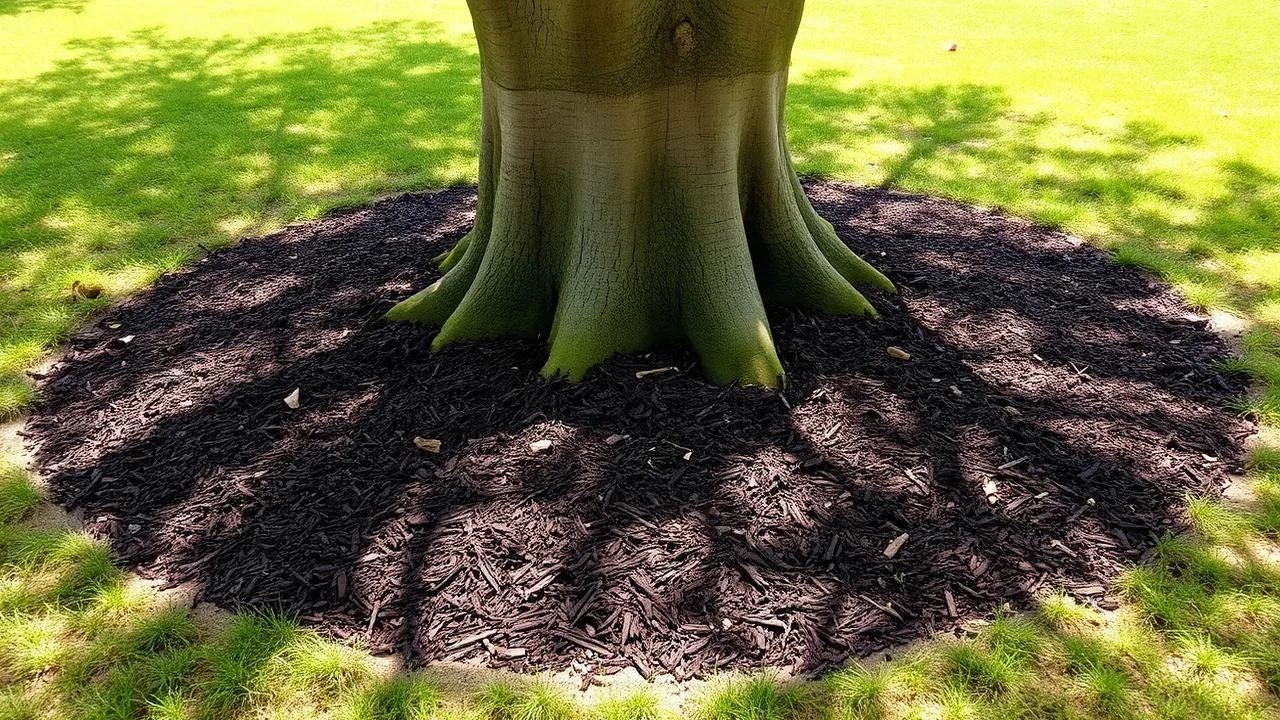
Mulch Should Help Your Tree, Not Suffocate It
Drive through almost any neighborhood in southeast Houston and you''ll see them: tall cones of mulch piled high against tree trunks. They look tidy and intentional, but they''re slowly killing the very trees they''re supposed to protect. Mulch is one of the cheapest, most effective tools for tree health when used correctly — and one of the most damaging when used wrong.
Mistake #1: The Mulch Volcano
The "mulch volcano" is the single most common mistake we see. Mulch piled against the trunk traps moisture against the bark, invites rodents and insects, and encourages roots to grow upward into the mulch instead of outward into the soil. Within a few years, the tree develops girdling roots and bark rot, and it begins a slow decline that''s often blamed on weather or "old age."
The fix: Pull mulch back at least 3–4 inches from the trunk so the root flare (the wider base where the trunk meets the soil) is fully visible. Think doughnut, not volcano.
Mistake #2: Too Deep
More mulch isn''t better. Anything over about 4 inches deep starts to block water and oxygen from reaching the roots, especially in our heavy Gulf Coast clay soils. Deep mulch also stays wet long enough to encourage fungal problems.
The fix: Keep mulch 2–4 inches deep, and refresh it (don''t just add to it) once a year. If old mulch is matted, break it up with a rake before topping off.
Mistake #3: Mulching Too Small an Area
A 2-foot ring of mulch around a 30-foot oak does almost nothing for the tree. Tree roots extend well beyond the canopy, and the most important feeder roots sit just under the soil surface in the outer third of the root zone — exactly where lawnmowers compact the soil and string trimmers wound the bark.
The fix: Mulch out to the drip line whenever possible. At minimum, aim for a ring that''s 3–5 feet wide around small trees and as wide as you can manage around large ones.
Mistake #4: The Wrong Material
Dyed wood chips, rubber mulch, and rock mulch all look fine but do little for the soil. Rock mulch in particular is a problem in Houston — it absorbs and radiates heat, drying out roots in the worst part of summer.
The fix: Use natural, undyed hardwood or pine bark mulch. As it breaks down it actually feeds the soil and improves drainage in our heavy clay — which is exactly what stressed Houston trees need.
Mistake #5: Mulching Over Existing Problems
If your tree has fungal growth at the base, exposed girdling roots, or storm-damaged bark, piling fresh mulch on top hides the issue without fixing it. We''ve responded to plenty of failed trees where the warning signs were buried under a fresh spring mulch job.
The fix: Before mulching, take a walk around each tree. Look at the root flare, the bark, and the lower trunk. If something looks off, get it evaluated before you cover it up.
The Right Way to Mulch a Houston Tree
- Clear away any old, matted mulch and any sod or weeds within the planned mulch ring.
- Expose the root flare so you can see where the trunk widens into the roots.
- Spread 2–4 inches of natural hardwood or pine bark mulch in an even layer.
- Keep mulch 3–4 inches away from the trunk on all sides.
- Extend the ring out to the drip line if you have the space and the material.
- Refresh once a year, breaking up any matted layers before topping off.
Frequently Asked Questions
Is rubber mulch safe for trees?
It doesn''t harm the tree directly, but it provides none of the soil-improvement benefits of natural mulch, and it traps heat. We don''t recommend it around trees in our climate.
How often should I add new mulch in Houston?
Top off once a year, usually in early spring. Don''t exceed the 2–4 inch total depth — if the existing mulch is still thick, just rake it to refresh the surface.
Can I mulch over tree roots that are above the soil?
You can lightly cover exposed surface roots with mulch (not soil), but if you''re seeing major surface roots, the tree may be reacting to compaction or drainage problems that mulch alone won''t solve. An arborist can help diagnose the cause.
Will mulch attract termites to my house?
Mulch itself doesn''t draw termites the way many homeowners fear, but mulch piled against the foundation can give them a hidden path inside. Keep mulch at least 6 inches away from your home''s foundation.
Need Help with a Struggling Tree?
If a tree in your yard is declining and you''re not sure why, Evergreen Tree Service offers free on-site assessments throughout southeast Houston — from La Porte and Pasadena to Deer Park, Baytown, Clear Lake, and League City. Call 832-643-6215 and we''ll take a look.
Ready to Protect Your Trees?
Evergreen Tree Service offers free estimates and expert care throughout La Porte, Deer Park, Pasadena, Baytown, and surrounding areas.
Or call us directly at 832-643-6215