
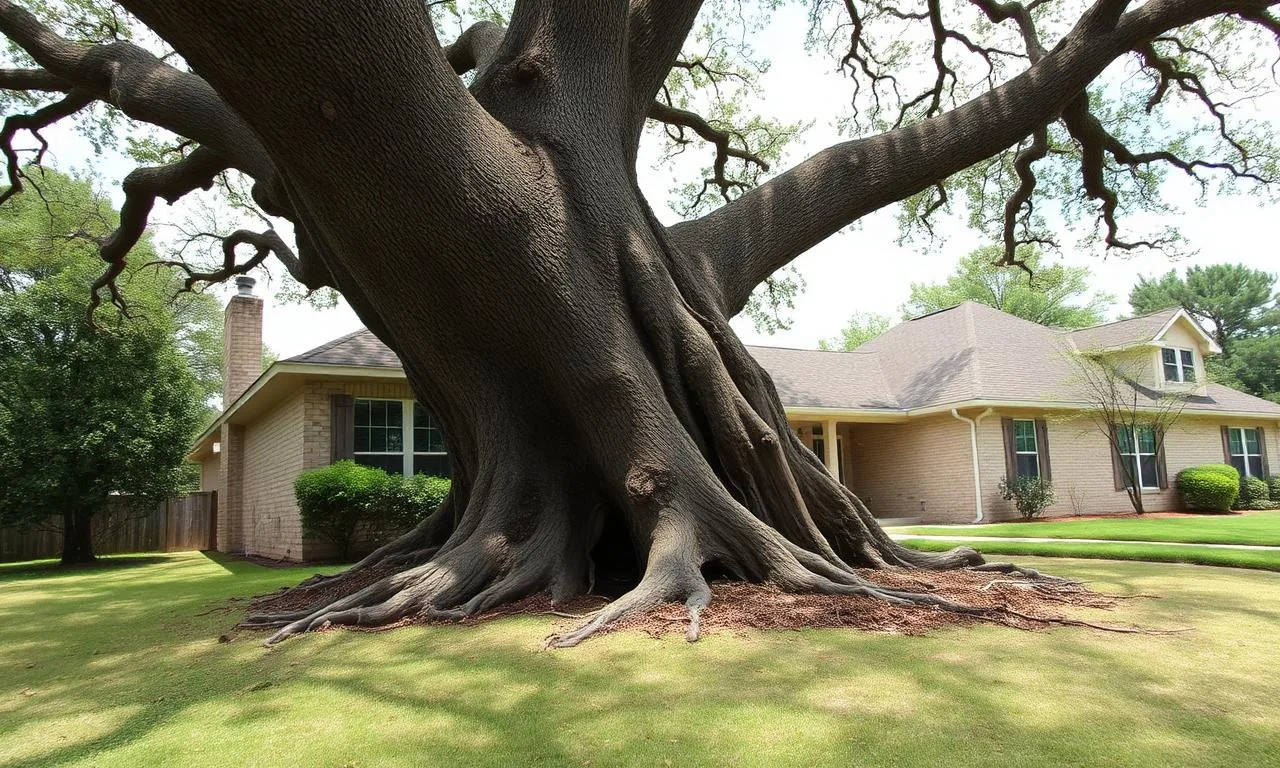
Strolling across your yard, you notice something is a little off. That tall pine tree near the driveway, is it leaning more than it was yesterday? Many homeowners in the Houston area have had a similar thought. While some trees naturally grow at a bit of an angle, a new or worsening lean can be a quiet signal of a serious problem brewing just beneath the surface. Knowing the difference between a quirky tree and a genuine hazard is key to protecting your property.
Is It an Old Lean or a New Problem?
The first thing to determine is whether the lean is a recent development. Many trees grow at an angle their entire lives, often reaching for better sunlight. These trees have developed a root system and trunk structure specifically to support their tilt. You might even see a slight curve at the base of the trunk as it corrects its growth upwards. This is a tree that is stable in its position.
A tree that has started leaning recently is a different story. This indicates a change in the tree's structural stability. The root system is likely failing, and the tree is slowly in the process of uprooting. This is the kind of lean that requires immediate attention, as it is a sign that the tree could fall.
Red Flags: Telltale Signs of a Hazardous Lean
A leaning tree often gives off several other warning signs that it is becoming unstable. When you inspect the tree, look for these telltale clues that point to a failing root system.
Soil Heaving and Exposed Roots
Walk to the side of the tree opposite the lean and look closely at the ground. Do you see the soil bulging or lifting upwards? This is called soil heaving, and it's a major red flag. It means the root plate is being pulled out of the ground as the tree tilts. You may also see newly exposed roots that were once buried, or roots that are visibly cracked and broken. This is a clear sign that the tree's anchor is failing.
Cracks in the Ground or Trunk
As the root system shifts, it can cause cracks to form in the soil radiating out from the base of the tree. Additionally, the stress of leaning can cause deep cracks to appear in the trunk itself, or you might notice sections of bark falling off. This indicates the wood is under immense pressure and may be starting to fail.
The Gulf Coast Soil Factor: Rain, Wind, and Roots
Here in southeast Texas, our soil and weather create a unique situation for trees. The heavy clay soil common in La Porte, Pasadena, and Baytown holds a tremendous amount of water. After the heavy downpours we get from thunderstorms or tropical systems, the ground becomes completely saturated. This soupy, unstable soil loses its ability to hold roots firmly.
When strong winds arrive, they can easily push on a tree and cause its water-logged root ball to shift. This is why we so often see trees topple after a major rain event. Certain species are more vulnerable. The shallow root systems of Pine trees and Water Oaks make them particularly prone to leaning and uprooting in our saturated Gulf Coast soil.
Your Pre-Call Checklist: What to Note
If you have a leaning tree, a professional arborist will need specific information to assess the risk. Before you call, take a moment to observe the situation and gather a few key details. Having this information ready helps us understand the urgency when you contact us.
- When did you first notice the lean, or has it changed recently?
- Are there visible signs of soil heaving or mounding at the base?
- Can you see any newly exposed, broken, or damaged roots?
- Are there any deep cracks in the trunk or large pieces of peeling bark?
- What is the tree leaning towards? Note its proximity to your house, a fence, a driveway, or power lines.
- If possible, take a few pictures from different angles to document the lean and any other signs of trouble.
Don't Wait and Wonder: Get a Professional Evaluation
A leaning tree is not something to ignore. The potential for property damage or injury is simply too high. An arborist can perform a detailed inspection to assess the tree’s health, the stability of the soil, and the overall degree of risk. Based on this evaluation, they can provide a clear recommendation.
In some cases, the problem might be manageable, but often, the safest solution is complete tree removal to eliminate the hazard before it fails. If you're concerned about a leaning tree on your property in Deer Park, La Porte, or anywhere in the southeast Houston area, don't leave it to chance. Get in touch with Evergreen Tree Service today for a professional and honest assessment.
Ready to Protect Your Trees?
Evergreen Tree Service offers free estimates and expert care throughout La Porte, Deer Park, Pasadena, Baytown, and surrounding areas.
Or call us directly at 832-643-6215